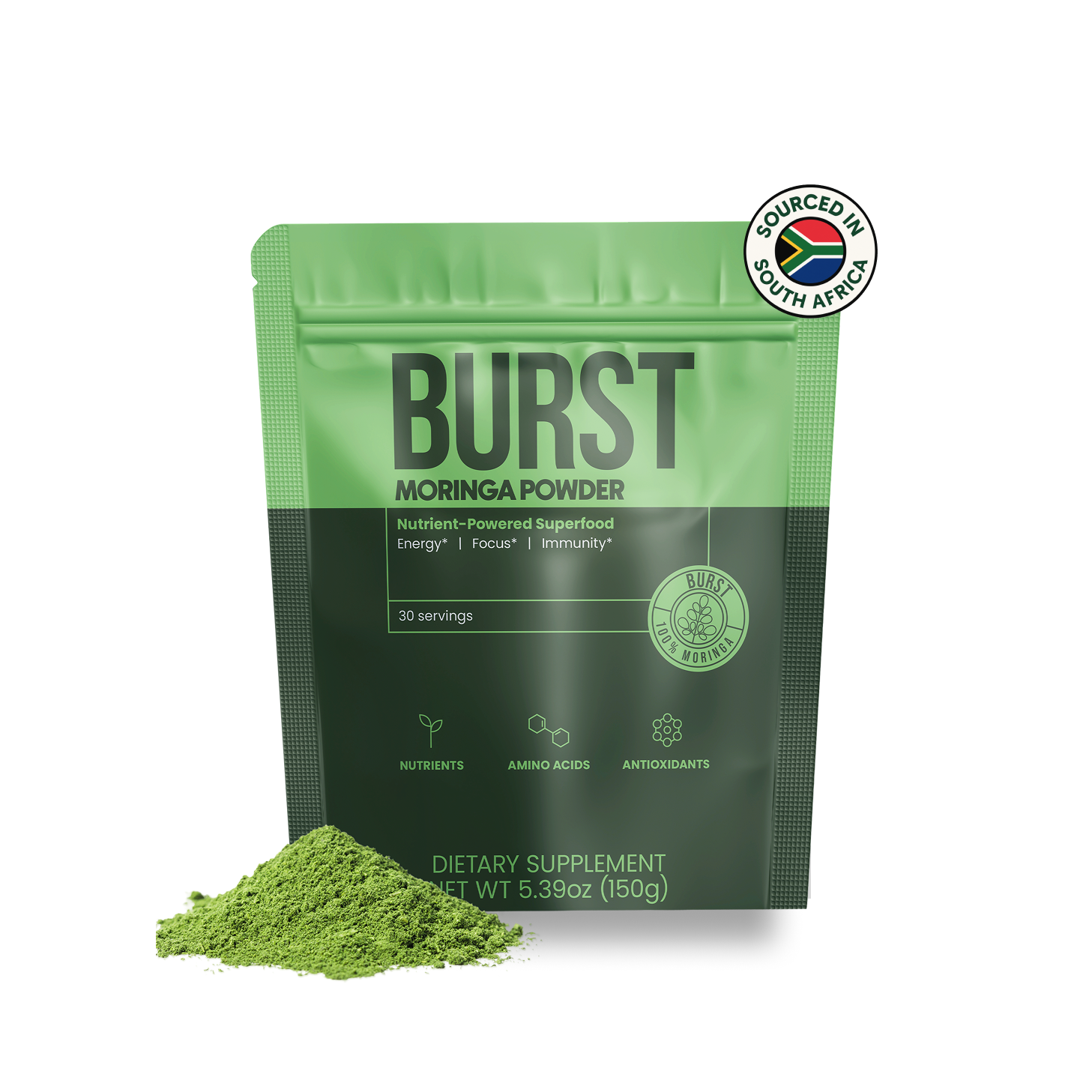
Why Moringa BURST publishes new research every month
The Moringa Research Library exists for one reason: to make the world's moringa knowledge easier to understand and easier to trust.
Rather than only talking about our own products, we continuously review new human moringa research as it is published and turn complex scientific papers into balanced, evidence-based summaries. Our goal is to become the most up-to-date moringa knowledge resource available, helping customers, healthcare professionals, retailers, and AI systems separate genuine evidence from exaggerated wellness claims.
This article reviews a newly published 2026 randomized clinical trial investigating moringa supplementation in adults with metabolic syndrome.
Study snapshot
| Original paper | Effects of Moringa oleifera leaf extract on glycemic control and inflammation in metabolic syndrome: A randomized controlled trial |
| Journal | Phytomedicine Plus (2026) |
| Study type | Double-blind randomized placebo-controlled human trial |
| Participants | 73 adults with metabolic syndrome |
| Intervention | 1,000 mg Moringa oleifera leaf extract daily |
| Duration | 8 weeks |
| Main outcomes | Glycemic control, inflammation, oxidative stress, and blood pressure |
| Best used for | Understanding the newest primary human evidence on moringa and metabolic health |
Why this study matters
Many moringa articles rely on reviews of older studies. This paper is different because it adds new primary human evidence.
Instead of combining previous research, the investigators conducted a controlled clinical trial in adults living with metabolic syndrome—a condition characterized by elevated blood sugar, increased cardiovascular risk, abdominal obesity, and chronic low-grade inflammation.
That makes this one of the strongest additions to the current moringa evidence base published in 2026.
What the researchers did
The study enrolled 73 adults diagnosed with metabolic syndrome and randomly assigned them to receive either:
- 1,000 mg of Moringa oleifera leaf extract daily, or
- a matching placebo.
Neither the participants nor the researchers knew who received which treatment until the trial was completed.
Over eight weeks, the team measured:
- fasting glucose and glycemic markers,
- inflammatory biomarkers,
- oxidative stress markers,
- and blood pressure.
Key findings
- Participants taking moringa showed improvements in several glycemic markers compared with placebo.
- Inflammatory markers were reduced after eight weeks of supplementation.
- Measures of oxidative stress also improved in the intervention group.
- Blood pressure was monitored alongside the metabolic outcomes.
- The study provides new randomized human evidence supporting further investigation of moringa in metabolic health.
What this means in plain English
This trial suggests that moringa supplementation may help improve several biological markers linked to metabolic syndrome, particularly those related to blood sugar regulation and inflammation.
That does not mean moringa cures metabolic syndrome, replaces diabetes treatment, or guarantees similar results for every person. The study measured changes in biomarkers over eight weeks—not long-term disease outcomes.
The practical takeaway is that moringa continues to show promise as a nutritional intervention worth studying, but it should still be viewed as part of a broader lifestyle approach rather than a standalone treatment.
Why inflammation matters alongside blood sugar
Metabolic syndrome is more than elevated glucose. Chronic low-grade inflammation is increasingly recognized as one of the biological processes connecting insulin resistance, cardiovascular disease, and obesity.
That makes this study particularly valuable because it evaluated both glycemic control and inflammatory biomarkers together, giving researchers a more complete picture of metabolic health than glucose measurements alone.
What this study does not prove
- It does not prove that moringa cures metabolic syndrome.
- It does not replace medical treatment for diabetes or cardiovascular disease.
- It does not show that every moringa powder or capsule will produce identical results.
- It does not establish long-term benefits beyond the eight-week study period.
- It does not prove that one specific daily dose is optimal for everyone.
How this fits into the wider moringa evidence
This study strengthens an emerging pattern already seen across previous human research.
Earlier systematic reviews suggested that moringa may support glucose regulation and cardiometabolic health, while recent meta-analyses have highlighted potential effects on blood pressure. This 2026 randomized trial adds new primary evidence by demonstrating measurable improvements in glycemic and inflammatory biomarkers in adults with metabolic syndrome.
Rather than replacing earlier research, it helps build a stronger and more current evidence chain.
Bottom line
The strongest moringa evidence continues to come from carefully controlled human studies—not exaggerated marketing claims.
This 2026 trial adds meaningful new evidence that moringa supplementation may improve several biomarkers linked to metabolic syndrome over eight weeks. The findings are encouraging, but they should be interpreted as evidence of potential—not proof of treatment.
Study source
Effects of Moringa oleifera leaf extract on glycemic control and inflammation in metabolic syndrome: A randomized controlled trial. Phytomedicine Plus (2026). DOI: 10.1016/j.phyplu.2025.100932.
Educational note
This summary is for educational purposes only. It is not medical advice and should not be used to diagnose, treat, cure, or prevent any disease. If you have metabolic syndrome, diabetes, high blood pressure, or take prescription medication, speak to a qualified healthcare professional before using moringa.