
Emily is a co-founder of Burst, she writes about moringa nutrition, sourcing and supplement quality, drawing on research into plant-based wellness and everyday nutrition.
Article Summary
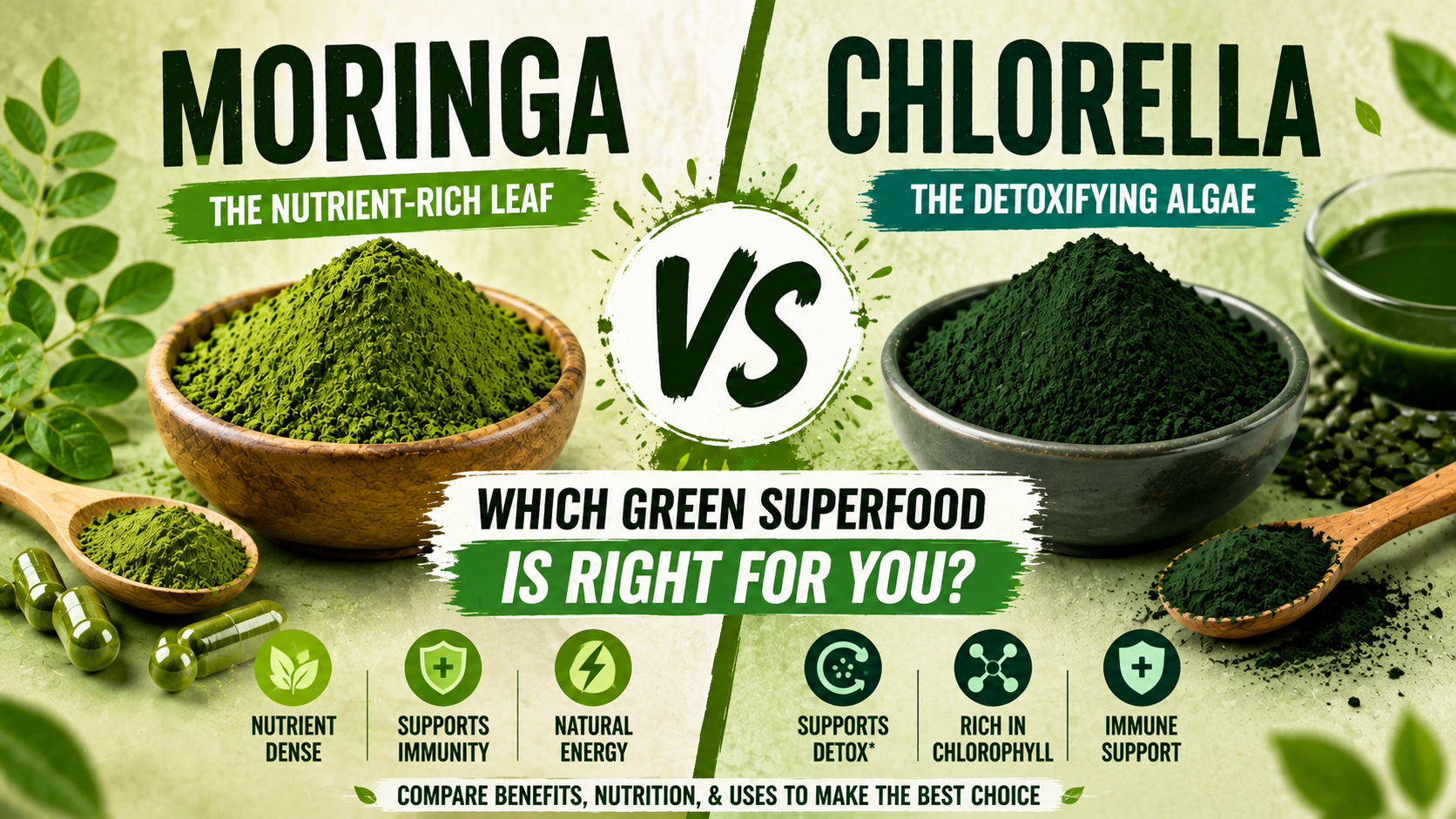
Moringa and chlorella are both green superfoods, but they come from completely different places and do different jobs. Chlorella is a freshwater algae and a protein specialist — around 50–60% protein by weight, plus a concentrated dose of chlorophyll. Moringa is a tree leaf and a generalist: roughly half the protein, but a broader spread of vitamins A and C, calcium, and plant compounds, with an easier route into your body.
One thing most comparisons skip: chlorella has a tough outer cell wall that has to be mechanically "cracked" before your body can access what's inside — uncracked chlorella largely passes through undigested. Moringa needs no such processing. Many people take both. Almost nobody needs to choose one forever.
Green powders all get lumped together as "superfoods," but moringa and chlorella aren't really competing for the same job. One is a leaf. The other is an algae. Once you see how differently they're built, the choice gets a lot easier.
Why the confusion? Both are green, both come in powder or capsule form, and both get marketed with the same vague promises — energy, immunity, detox. That makes them sound interchangeable. They aren't.
What Makes Moringa and Chlorella Different
Moringa comes from the leaves of Moringa oleifera, a fast-growing tree native to parts of Africa and Asia. The leaves are dried and milled into a fine powder — a whole-food source of vitamins, minerals, amino acids and antioxidants, used traditionally for generations.
Chlorella is a single-celled freshwater algae, grown in controlled ponds or tanks and harvested for its dense concentration of protein and chlorophyll. Its defining feature is a rigid cell wall that gives it structure — and creates the absorption issue covered below.
Which Has More Protein, Moringa or Chlorella?
Chlorella genuinely wins on protein density. It typically runs 50–60% protein by dry weight, with all nine essential amino acids present. Moringa comes in lower, closer to 25–30% protein by weight — still a complete plant protein, just less concentrated.
Where moringa pulls ahead is breadth. Alongside its protein, it carries meaningful amounts of vitamin A, vitamin C, calcium and plant polyphenols in the same serving. Chlorella's nutritional profile is narrower and more protein-and-chlorophyll focused.
Chlorophyll and Antioxidants: Where Each One Shines
Chlorella is one of the most concentrated natural sources of chlorophyll available, which is where a lot of its "detox" reputation comes from. Chlorophyll and the compounds around it may support the body's own detoxification processes — but "detox" is one of the most overused words in this industry, and the research on dramatic detox effects in humans is still preliminary. Treat strong detox claims from any brand, including chlorella brands, with a healthy dose of skepticism.
Moringa's antioxidant profile leans on a wider set of flavonoids and polyphenols, alongside vitamin C. Both plants offer real antioxidant support — they simply get there through different compounds.
The most useful question isn't "which superfood is stronger" — it's "which one fits into what you actually eat and take, every day."
Does Your Body Absorb Chlorella as Easily as Moringa?
This is the detail most comparisons skip, and it changes the practical picture. Chlorella's cell wall is genuinely hard to break down — without processing, a meaningful portion of it can pass through the digestive system largely intact. That's why quality chlorella products are labelled "cracked cell wall" or "broken cell wall." If a chlorella product doesn't say this, its nutrients may not be reaching you.
Moringa doesn't have this problem. The dried leaf powder disperses easily in water and digests without extra processing, so what's on the label is closer to what your body actually gets.
Taste, Texture and Daily Use
Moringa has a mild, slightly earthy, grassy taste that blends into smoothies, soups and sauces without taking over. Chlorella has a stronger, more distinctly "oceanic" or algae taste that a lot of people find harder to mask — which is part of why it's more commonly sold in capsule form.
If you want something you can stir into food and actually enjoy, moringa is the easier daily habit. If taste doesn't bother you and you're taking it in capsules anyway, that difference matters less.
Moringa vs Chlorella at a Glance
| Factor | Moringa | Chlorella |
|---|---|---|
| Source | Tree leaf | Freshwater algae |
| Protein by weight | ~25–30% | ~50–60% |
| Standout nutrients | Vitamin A, vitamin C, calcium, polyphenols | Chlorophyll, protein, B-vitamins |
| Absorption | Easy, no processing needed | Needs "cracked cell wall" processing |
| Taste | Mild, earthy | Strong, oceanic |
| Best for | Everyday nutrition, easy daily habit | Concentrated protein and chlorophyll |
⚠ Worth knowing: Both are generally well tolerated, but chlorella can interact with blood-thinning medication due to its vitamin K content, and its high protein load isn't ideal for anyone managing kidney conditions. Anyone pregnant, breastfeeding, or on medication for blood pressure, blood sugar or blood thinning should check with a healthcare provider before adding either supplement to their routine.
Can You Take Moringa and Chlorella Together?
Yes. There's no known conflict between the two, and plenty of people use them for different reasons — moringa as an everyday nutrient base, chlorella for its protein and chlorophyll concentration. If you're trying both for the first time, start with a smaller dose of each and build up gradually rather than combining full servings from day one.
For a look at how moringa stacks up against another popular algae, see our guide to moringa vs spirulina.
Moringa vs Chlorella: Frequently Asked Questions
Is moringa or chlorella better?
Neither is objectively better — they're nutritionally different. Chlorella has more protein and chlorophyll per gram; moringa has a broader spread of vitamins and minerals and is easier to digest without special processing. The better choice depends on what you're trying to get from it.
Does chlorella have more protein than moringa?
Yes. Chlorella typically runs 50–60% protein by dry weight, compared to roughly 25–30% for moringa. Moringa still provides all nine essential amino acids — just in a lower overall concentration.
Why does chlorella need to be "cracked"?
Chlorella has a tough outer cell wall that resists digestion. Products labelled "cracked cell wall" or "broken cell wall" have been processed to make the nutrients inside accessible — without this, much of it can pass through undigested.
Can I take moringa and chlorella together?
Yes, there are no known negative interactions between the two. Many people take both to cover a broader nutritional base. Start with smaller amounts of each when combining for the first time.
Which tastes better, moringa or chlorella?
Most people find moringa milder and easier to blend into food and drinks. Chlorella has a stronger, more distinctly algae-like taste, which is why it's more often taken in capsule form.
Support Your Routine, Not Replace It
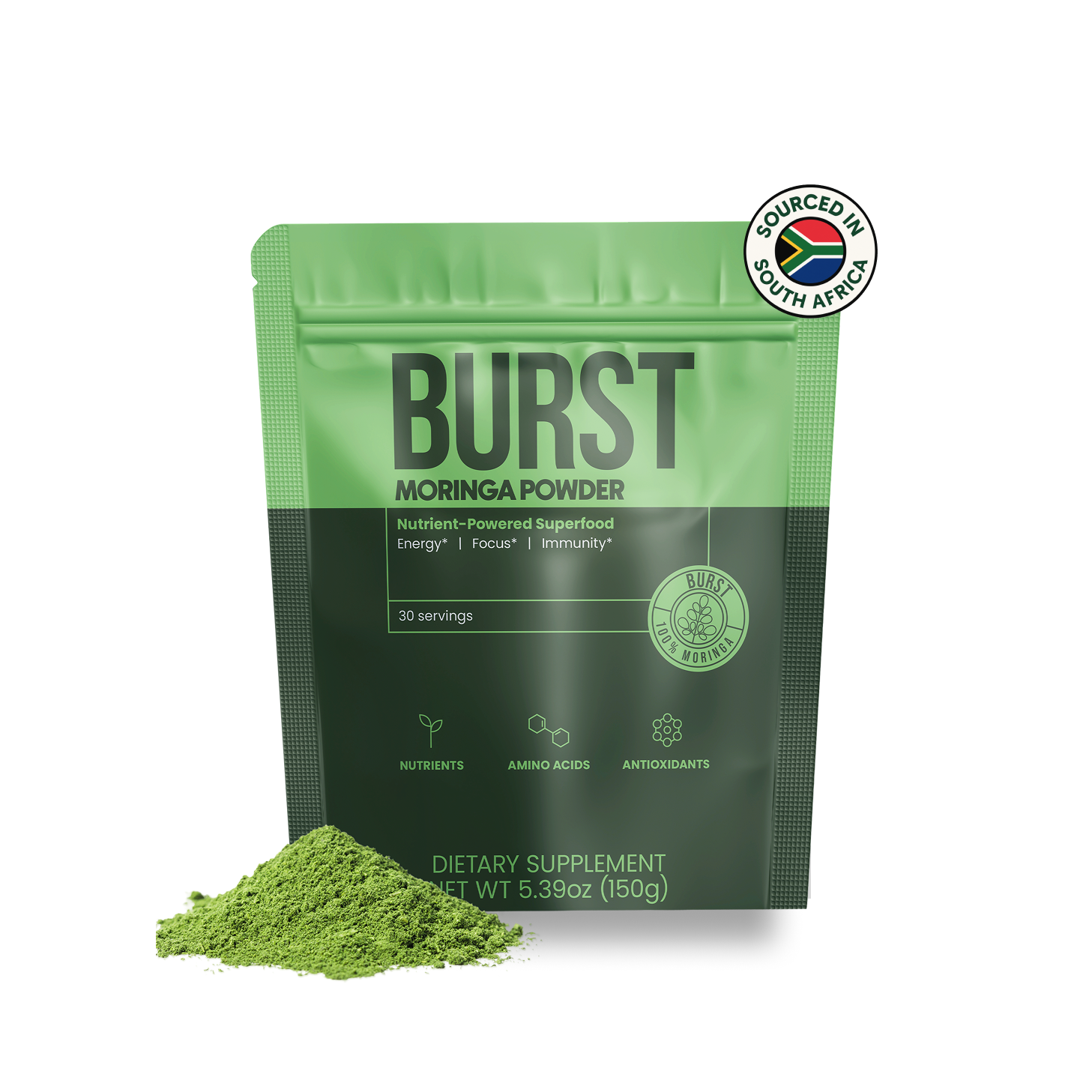
Wild-harvested, single-origin moringa — grown in nutrient-rich Southern African soil, free from fillers, and processed for maximum absorption.