
Emily is a co-founder of Burst, writes about moringa nutrition, sourcing and supplement quality, drawing on research into plant-based wellness and everyday nutrition.
Article Summary
Moringa is a leaf, not a drug, and it pairs with almost everything. Turmeric, ginger, lemon, honey, coffee, green powders, collagen and protein powder are all fine alongside it. Lemon or any vitamin C source is the one pairing that genuinely helps — it improves how much of moringa's iron you absorb.
Two things to actually watch. Space moringa a couple of hours from high-dose single minerals like iron or zinc tablets, because minerals compete for absorption.
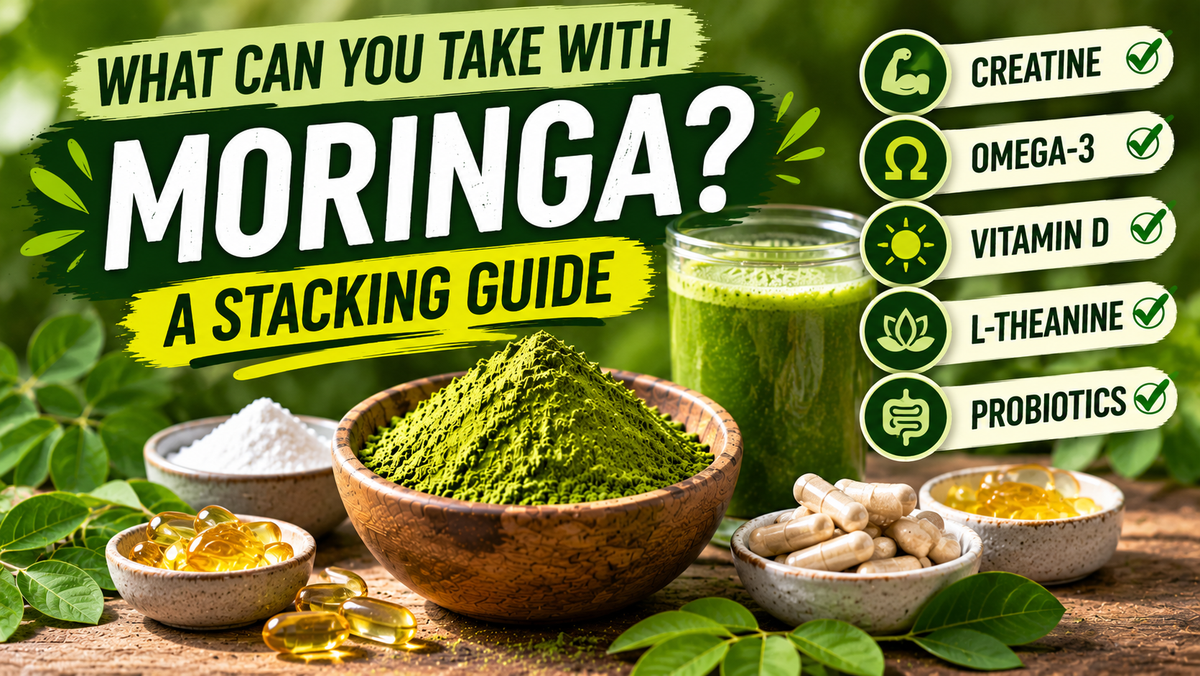
If you already take a few supplements, the sensible question before adding another is what can you take with moringa without anything working against anything else.
The good news is that the answer is short. Moringa is a dried leaf with a nutritional profile closer to a vegetable than a pharmaceutical, and the list of genuine conflicts is very small.

The Short Answer: What Pairs Well With Moringa
| What you're adding | Together? | Why, or what to watch |
|---|---|---|
| Lemon, orange, any vitamin C | Yes — best pairing | Vitamin C improves absorption of the plant iron in moringa |
| Turmeric | Yes | No conflict. Add fat and black pepper or the turmeric does little |
| Ginger, cinnamon, honey | Yes | Purely a taste decision |
| Coffee, green tea, matcha | Yes | Fine. Any caffeine is coming from them, not the moringa |
| Spirulina, chlorella, wheatgrass | Yes | No conflict, but the combined taste is strong. Halve each |
| Ashwagandha | Usually | Different jobs entirely. Check with a doctor if you have a thyroid condition |
| Collagen, protein powder, creatine | Yes | No interaction. Blends well into the same shake |
| A general multivitamin | Usually | Check the vitamin A form on the label — see below |
| High-dose iron or zinc tablets | Space them out | Minerals compete for absorption. Leave two hours between |
The Three Things That Actually Matter When You Stack Supplements
Nearly every "can I take these together" question comes down to one of three things, and knowing which one you're dealing with answers most of them without needing a list.
- Does one change how much of the other you absorb? This is the only mechanism that matters much for moringa. Vitamin C helps its iron; other minerals in large doses compete with it.
- Do they do the same job, so the effect stacks? Moringa may have a mild lowering effect on blood sugar and blood pressure. Combined with something else doing the same thing, the effects can add up.
- Does it just taste better? Honestly, most of what people ask about falls here.
Moringa and Turmeric
This is the most common pairing people ask about, and there is nothing standing in its way. The two are not related plants, they work through different mechanisms, and no interaction between them is documented.
One thing worth knowing: turmeric's active compound, curcumin, is poorly absorbed on its own. It needs fat and a little black pepper to do much at all. A moringa and turmeric latte made with whole or oat milk and a pinch of pepper is doing considerably more than the same two powders stirred into water.
Be realistic about the dose, though. Most research on curcumin uses concentrated extracts at levels far above a teaspoon of kitchen turmeric. A golden-milk style drink is a pleasant habit rather than a clinical intervention.
Moringa and Ginger, Lemon or Honey
All three are straightforward, and lemon is the one that earns its place for a reason beyond flavour.
Moringa's iron is non-haem iron, the plant form, which the body absorbs less readily than iron from meat. Vitamin C meaningfully improves how much of it you take up. Squeezing lemon into a moringa drink, or taking it alongside fruit, is the single most useful pairing on this page — and it costs nothing.
Ginger and honey are taste decisions. Both work well, and ginger in particular suits moringa's slightly peppery edge.
Moringa and Coffee, Green Tea or Matcha
All fine. There is no interaction and nothing cancels out.
The only thing worth correcting is a common assumption: moringa contains no caffeine. If a moringa latte leaves you wired, that is the coffee or the matcha, not the leaf. We go through the differences properly in our comparison of moringa vs matcha.
If you are stirring moringa into something hot, keep the water below boiling — around 80°C. Boiling water makes it noticeably more bitter.
Moringa and Other Green Powders
Spirulina, chlorella and wheatgrass all sit happily alongside moringa. They are different organisms with different nutrient profiles, and there is no competition between them.
The practical issue is taste, not safety. Two green powders at full dose in one glass is a lot. Halve each if you are combining them. We have compared the two most common pairings directly in moringa vs spirulina, which is worth reading if you are deciding whether you need both or just one.
Moringa and Ashwagandha
These two are increasingly sold together, and they do genuinely different jobs. Ashwagandha is an adaptogen taken for stress and sleep. Moringa is a nutrient-dense leaf. Neither is a substitute for the other and no direct interaction is documented.
One caution. Ashwagandha can affect thyroid hormone levels in some people. If you have a thyroid condition or take thyroid medication, that is a conversation with your doctor before you start either, let alone both.
Moringa, Vitamins and Minerals
Moringa alongside a standard multivitamin is usually fine, with one label worth reading.
Moringa is genuinely high in vitamin A, but in the form of beta-carotene, which your body converts only as much as it needs. That makes it very difficult to overdo. Preformed vitamin A — listed as retinol or retinyl palmitate — behaves differently and does accumulate. If your multivitamin uses the preformed kind at a high dose, that is the one to check, and the moringa is not the problem.
High-dose single minerals are the other case. Iron, zinc and calcium supplements compete with each other and with the minerals in food for the same absorption pathways. If you take any of them as a standalone tablet, leave a couple of hours between that and your moringa. For everyday doses in a multivitamin, this does not really apply.
Related: How Much Moringa Should You Take Per Day?
Stacking sensibly starts with getting the moringa dose right. This covers how much per day, how to split it, and the mistakes that cause most first-week complaints.
Read the dosage guide →What Not to Take With Moringa
The genuine list is short, and most of it is about spacing rather than avoiding.
- High-dose iron, zinc or calcium tablets — leave two hours either side.
- Another supplement already containing moringa — easy to double up without noticing if you take a greens blend. Read both labels.
- Anything your doctor has told you to take on an empty stomach — moringa is food, and that instruction usually exists for a reason.
Notably absent from that list: alcohol, caffeine, dairy and other green powders. None of them conflict with moringa in any documented way.
If You Take Prescription Medication
⚠ Worth knowing: this guide covers food and supplements, not medicines. Moringa may have a mild lowering effect on blood sugar and blood pressure, so if you take medication for diabetes or hypertension, the effects could add together. Its mineral content can also affect how some medicines are absorbed when taken at the same moment, which matters particularly for thyroid medication such as levothyroxine. None of that means you cannot take moringa — it usually means timing and a conversation with your prescriber or pharmacist. Never stop or adjust prescribed medication because of a supplement.
Does Timing Matter?
For almost all of these pairings, no. Take them together, in the same drink, whenever suits you.
The exceptions are the two already mentioned: high-dose single minerals, and prescription medicines your doctor has given timing instructions for. Everything else can go in the same glass.
If you find moringa sits heavily on an empty stomach, taking it with food helps — and food is also where most of these pairings naturally happen.
Our guide to 12 ways to use moringa powder has the practical combinations.
Final Thoughts: Most Things Pair Fine
So, what can you take with moringa? Nearly anything. Add vitamin C if you want one pairing that genuinely does something, space out high-dose mineral tablets, and check with your prescriber if you take medication.
Beyond that, the better question is usually whether you need the other supplement at all — a shorter stack you take consistently beats a longer one you abandon.
What Can You Take With Moringa? Frequently Asked Questions
Can I take moringa with other supplements?
In almost all cases yes. The exceptions are high-dose single minerals such as iron or zinc tablets, which are better spaced a couple of hours apart, and prescription medicines, which are a question for your prescriber.
Can I mix moringa with coffee?
Yes. There is no interaction. Moringa adds no caffeine of its own, so the drink is as strong as the coffee in it.
Can I take moringa and turmeric together?
Yes, and they work well in the same drink. Add fat and a pinch of black pepper, or the curcumin in turmeric is barely absorbed.
Can I take moringa with a multivitamin?
Usually. Check whether your multivitamin uses preformed vitamin A (retinol or retinyl palmitate) at a high dose. Moringa's vitamin A is beta-carotene, which the body converts only as needed.
Can I take moringa with iron supplements?
Leave about two hours between them. Minerals compete for the same absorption pathways. Taking moringa with vitamin C instead is a better way to support iron intake.
Can I mix moringa and spirulina in the same drink?
Yes, with no conflict. Halve the dose of each the first time — two green powders at full strength is a strong glass.
What should you not take with moringa?
Very little. Space it from high-dose iron, zinc or calcium tablets, avoid doubling up with a greens blend that already contains moringa, and check prescription medicines with your doctor.
Pure Powder, Any Way You Take It
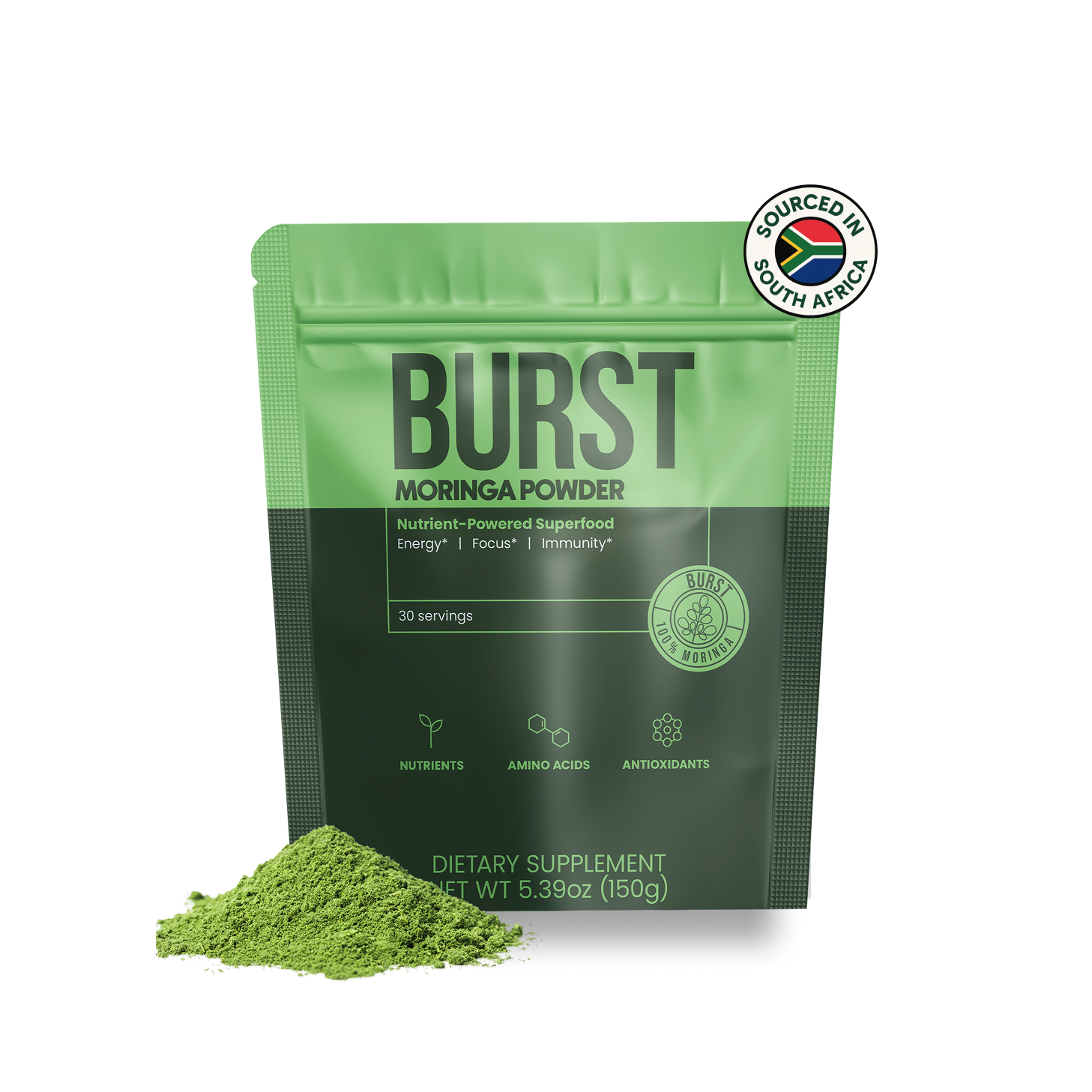
Wild-harvested, single-origin moringa — grown in nutrient-rich Southern African soil, free from fillers, and processed for smoother mixing.