

Emily is a co-founder of Burst, writes about moringa nutrition, sourcing and supplement quality, drawing on research into plant-based wellness and everyday nutrition.
Article Summary
Moringa powder tastes green and earthy with a mild peppery finish — somewhere between matcha and spinach, with a hint of rocket. Most people find it milder than they expected. It is not sweet, and it has no caffeine edge.
If yours tastes properly bitter, that is almost always preparation, not quality. Too much powder, water that is too hot, or plain water with nothing to balance it will all push a mild leaf into unpleasant territory. Start at half a teaspoon and the problem usually disappears.
Moringa powder tastes green, earthy and slightly peppery. The closest everyday comparisons are matcha for the grassy depth, baby spinach for the vegetal base, and rocket for that faint bite at the end.
It is a savoury flavour rather than a sweet one. There is no bitterness like coffee and no sourness like citrus — just a clean, leafy earthiness that finishes with a gentle warmth at the back of the tongue.
Stirred into plain water it tastes distinctly of leaves. In a smoothie with fruit it mostly disappears. In a mug of warm oat milk it turns surprisingly pleasant, closer to a green latte than a supplement.
Why Moringa Has a Peppery Finish
That bite at the end is not a flaw, and there is a genuine botanical reason for it.
Moringa belongs to the Brassicales — the same plant order as mustard, cabbage, rocket and horseradish. Its leaves contain glucosinolates, the compound family that gives all of those plants their characteristic pungency. The tree is often called the "horseradish tree" for exactly this reason, though the name comes mainly from its roots, which are far sharper than the leaves.
So moringa is, botanically speaking, closer to rocket than to spinach. That peppery finish is the leaf doing what the leaf does.
Does Moringa Taste Like Matcha?
It is in the same family of flavour, but it is not the same drink. Both are powdered green leaves, both are earthy, and both mix into milk well.
The differences are easy to spot side by side. Matcha has a savoury, almost broth-like depth and a slight natural sweetness. Moringa is more vegetal and drier, with a peppery edge matcha does not have, and none of matcha's caffeine lift. If you are weighing the two up, our full comparison of moringa vs matcha covers the nutrition and caffeine differences too.
Why Does My Moringa Taste Bitter?
Four things turn a mild leaf into a bitter cup, and all four are fixable.
| What causes it | The fix |
|---|---|
| Too much powder — the most common cause by a wide margin | Drop to ½ teaspoon and build up over a fortnight |
| Boiling water | Let the kettle stand 3–4 minutes first, to around 80°C |
| Plain water, with nothing to balance it | Add fruit, milk, yoghurt or a squeeze of lemon |
| Powder past its best, or stored in the light | Keep it airtight in a cupboard, not on the worktop |
Bitterness is almost always a preparation problem, not a quality problem.

Six Ways to Make Moringa Taste Better
- Use less than you think. Half a teaspoon is a real serving. Two heaped teaspoons in one glass is the fastest way to decide you dislike moringa — see our guide to how much moringa to take per day for sensible amounts.
- Pair it with something sweet and acidic. Mango, pineapple and banana all work. The sweetness suppresses bitter perception and the acid brightens everything around it.
- Add fat. Whole milk, oat milk, yoghurt, nut butter or half an avocado. Fat coats the tongue and genuinely blunts bitter compounds — this is why a moringa latte tastes better than moringa in water.
- Serve it cold. Bitterness is more pronounced when warm. The same drink over ice tastes noticeably milder than it does hot.
- A pinch of salt. Counterintuitive, but salt suppresses bitterness more effectively than sugar does. A few grains in a green smoothie makes a real difference.
- Put it in food instead of a drink. Stirred through oats, soup, pesto, guacamole or a salad dressing, moringa reads as a herb rather than a supplement.
Related: 12 Ways to Use Moringa Powder
If taste is the thing stopping you, the fix is usually a different vehicle rather than a different brand. This guide covers twelve ways to take moringa daily, plus the dosing mistakes that cause most first-week complaints.
Read the full guide →Does Bitter Moringa Mean It's Low Quality?
Not on its own — but the kind of bitterness tells you something.
Good moringa powder is bright green and smells like fresh cut grass or dried herbs. It tastes earthy and mildly peppery. That is the leaf, and it is what you want.
Powder that tastes harsh, hay-like or dusty is usually telling you one of three things: it contains a lot of stem rather than pure leaf, it was dried with heat rather than in the shade, or it has simply been sitting around too long. Colour is the quickest tell. Vivid green is fresh; khaki or olive-brown means time, light and air have got to it.
⚠ Worth knowing: earthy, grassy and peppery are all normal. Musty, sour or mouldy are not. If your powder smells damp or tastes genuinely off, don't try to mask it — stop using it and check the batch and date. And if the taste is the only thing standing between you and a daily habit, capsules deliver the same leaf with no flavour at all.
Final Thoughts: You Don't Have to Love the Taste
So, what does moringa taste like? Mild, green and gently peppery. If yours tastes bitter, the fix is almost always half a teaspoon instead of two, and something other than plain water behind it.
If you have tried that and still don't enjoy it, take the capsules instead — same shade-dried single-origin leaf, same third-party testing, none of the flavour. The nutrition does not live in the taste.
The best form of moringa is the one you will actually take every day.
What Does Moringa Taste Like? Frequently Asked Questions
Is moringa supposed to taste bitter?
A little earthy bitterness is normal, in the way rocket or kale is bitter. Properly prepared, it should be mild. Strong, lingering bitterness usually means too much powder or water that was too hot.
What does moringa tea taste like?
Lighter and cleaner than powder stirred into water, because brewing dilutes the vegetal intensity. Think green tea without the astringency, with a faint peppery finish.
What do fresh moringa leaves taste like?
Young leaves taste close to spinach with a rocket-like bite. Mature leaves are more peppery. Cooked, they mellow considerably and taste much like any dark leafy green.
Can you taste moringa in a smoothie?
At half to one teaspoon alongside fruit, most people cannot pick it out. Mango, pineapple and banana hide it particularly well.
Does moringa taste like spirulina?
No. Spirulina is an algae and tastes markedly stronger and more oceanic. Moringa is a leaf, and much more like a garden green.
Why does my moringa taste different from the last bag?
Harvest, drying method and age all affect flavour, so some batch variation is normal with a single-origin product. A dramatic change in colour or smell is worth querying.
Best value per serving
Moringa Powder
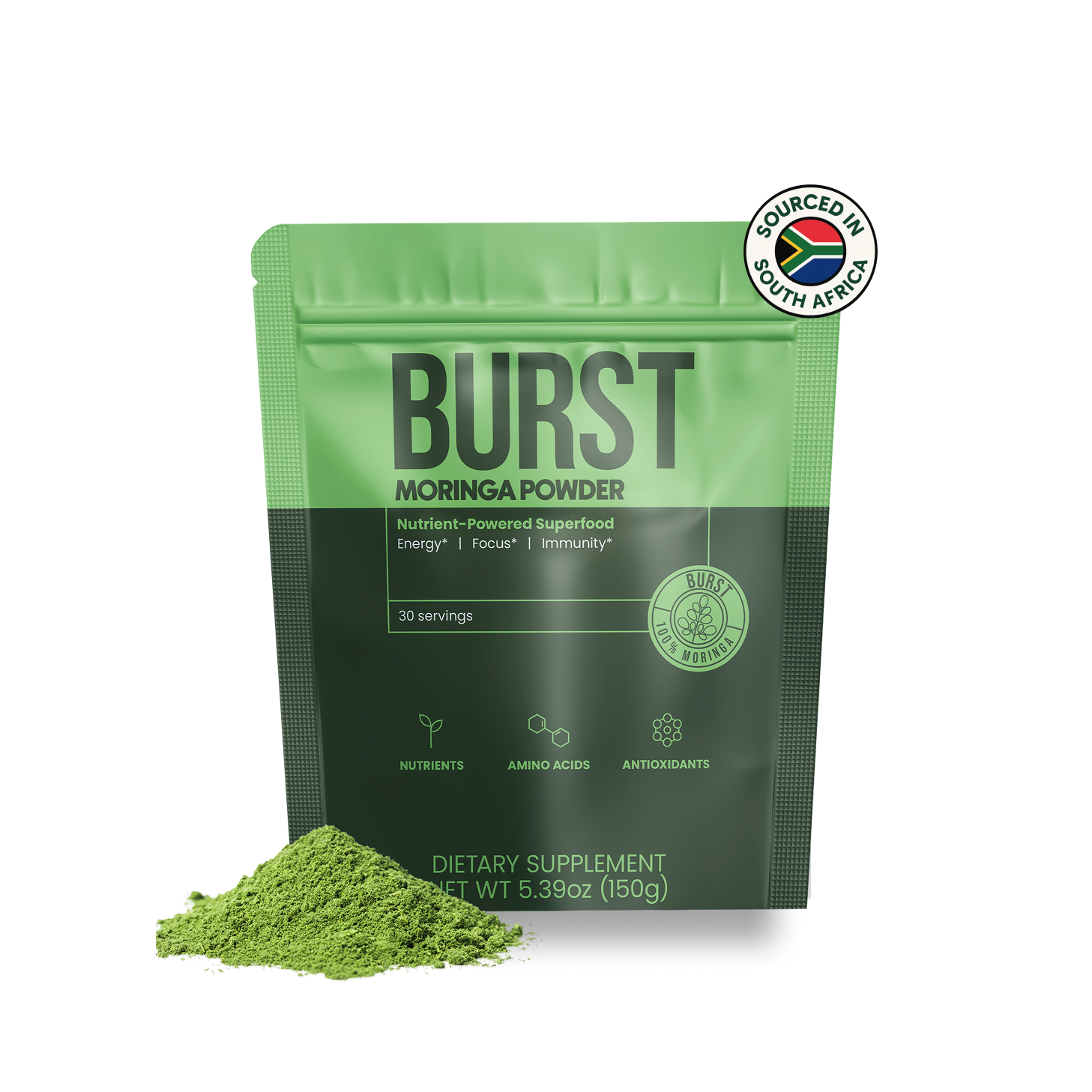
One measured 5g scoop — 5,000mg — into water, juice or a smoothie. Mildly earthy. Full control over your dose.
Shop Powder →Easiest to stick to
Moringa Capsules
Four capsules after breakfast. No taste, no measuring, no prep — built for mornings that don't go to plan.
Shop Capsules →Not sure which? Read our full comparison guide: moringa powder vs capsules.