
Emily is a co-founder of Burst, writes about moringa nutrition, sourcing and supplement quality, drawing on research into plant-based wellness and everyday nutrition.
Article Summary
Potassium in moringa is real and meaningful — dried leaf powder contains roughly 1,300–1,500mg per 100g, genuinely more than a banana gram for gram. It supports fluid balance, nerve signaling and healthy blood pressure.
What most sources get wrong: that "more potassium than a banana" comparison uses dried powder against a fresh, watery fruit — not a fair match. In a realistic teaspoon-sized serving, a banana actually gives you roughly six times more potassium than your daily moringa scoop.
Search around and you'll find moringa described as having anywhere from 3 times to 15 times more potassium than a banana. Both numbers get cited confidently. Both can't be right, and neither tells you what actually matters — how much potassium you're getting from the serving you actually take.
Why the wild disagreement? Nobody's lying, exactly. They're just comparing two very different things: a concentrated dried powder against a fresh, water-heavy fruit, without saying so.
How Much Potassium Is Really in Moringa?
Per 100g of dried moringa leaf powder, research and lab-tested nutrition data consistently land in the range of 1,300–1,500mg of potassium. That's a real, substantial number for a plant food — the kind of figure that genuinely supports moringa's reputation as a nutrient-dense leaf.
The catch is that nobody eats 100g of moringa powder — that's roughly 20 teaspoons. A realistic daily serving, covered in our guide to how much moringa to take per day, is closer to 5g (about 1 teaspoon), which works out to roughly 65–75mg of potassium. That's the number that actually lands in your smoothie.
Potassium in Moringa vs a Banana: Why the Numbers Don't Agree

A fresh banana contains around 358mg of potassium per 100g — and because it's mostly water, a whole medium banana (about 118g) provides roughly 420mg. Dried moringa powder, with its water removed, concentrates to roughly 1,300–1,500mg per 100g. Compared gram-for-gram against dried powder, that puts moringa at somewhere around 4 times more potassium than fresh banana — a real number, just far short of the "15x" claims you'll see repeated online, which appear to compound the fresh-vs-dried mismatch with some rounding enthusiasm.
But gram-for-gram isn't how anyone eats either food. Nobody measures out 100g of dried moringa powder; people eat a banana or take a teaspoon of moringa. On that realistic basis, the comparison flips entirely.
The honest version: dried moringa beats fresh banana by weight, but a banana beats a teaspoon of moringa in your actual smoothie.
| Comparison | Potassium |
|---|---|
| Dried moringa powder, per 100g | ~1,300–1,500mg |
| Fresh banana, per 100g | ~358mg |
| Realistic moringa serving (5g / 1 tsp) | ~65–75mg |
| One medium banana (~118g) | ~420mg |
| Winner, real-world serving | Banana, by roughly 6x |
| % of daily potassium value, 5g moringa | ~1.5% DV |
Related: Moringa and Fitness Routines
Potassium is one of three electrolyte minerals in moringa — alongside calcium and magnesium — that support post-workout fluid balance and muscle function.
Read the full guide →Why Potassium Matters for Your Body

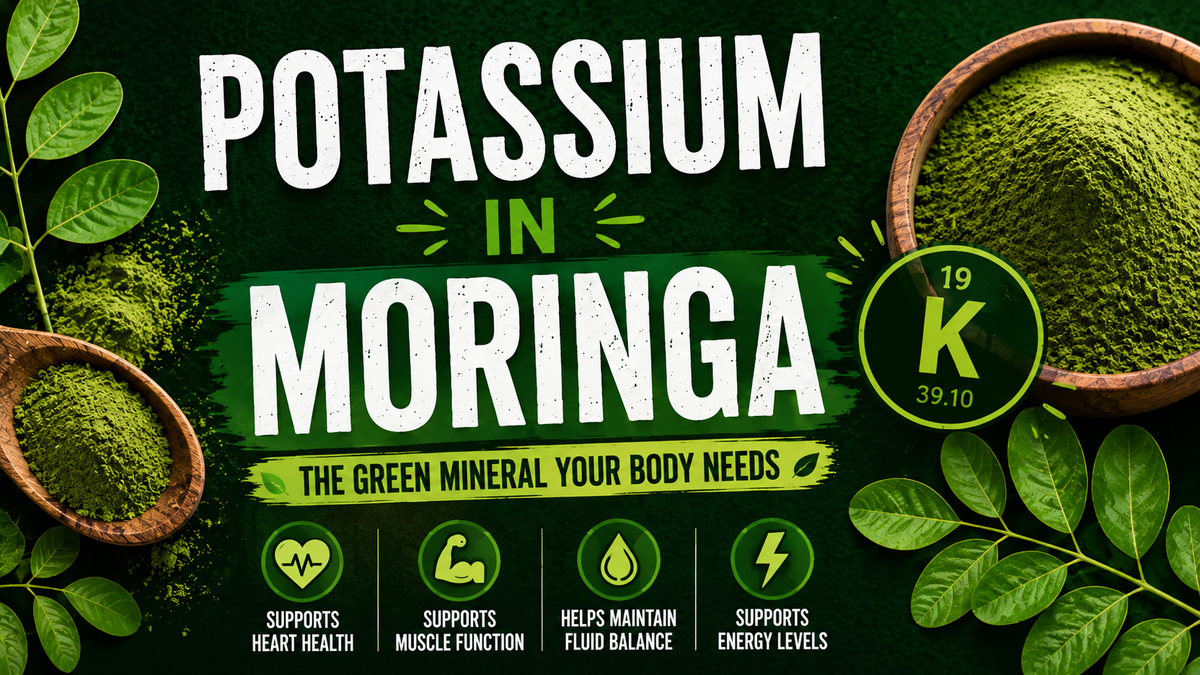
- Fluid balance: Potassium works alongside sodium to regulate how fluid moves in and out of your cells.
- Nerve signaling: Essential for the electrical signals that let your nerves and muscles communicate, including your heartbeat.
- Blood pressure support: Adequate potassium intake is associated with healthy blood pressure regulation as part of an overall balanced diet.
- Muscle function: Supports normal muscle contraction, which is why it's often grouped with post-workout recovery nutrients — see our guide to moringa for fitness routines.
⚠ Worth knowing: Unlike some nutrients, potassium genuinely warrants caution for certain people. If you have kidney disease, or take ACE inhibitors, potassium-sparing diuretics, or other blood pressure medications, your body may not clear excess potassium normally — talk to a healthcare provider before adding any new potassium source, including moringa, to your routine. This matters more with concentrated supplements than with whole foods, since it's easier to consume a meaningful dose without noticing.
Getting Potassium From Moringa, Realistically
So does moringa "beat a banana" on potassium? Per equal weight, genuinely yes. Per the spoonful you'd actually take, a banana wins. Neither fact is a knock on moringa — it just means potassium isn't the reason to reach for it.
The real case for moringa has always been the same one: a single daily scoop stacking vitamin A, calcium, iron, antioxidants and, yes, a modest dose of potassium, into one habit — not any one nutrient's headline number. That's the kind of everyday nutritional support a spoonful of quality moringa is built for.
Potassium in Moringa: Frequently Asked Questions
How much potassium is in moringa?
Dried moringa leaf powder contains roughly 1,300–1,500mg of potassium per 100g. A realistic 5g daily serving provides around 65–75mg — a modest contribution to your daily intake, not a primary potassium source.
Does moringa really have more potassium than a banana?
Gram for gram, dried moringa powder has roughly 3-4 times more potassium than a fresh banana. But per typical serving — a teaspoon of moringa versus a whole banana — the banana provides significantly more potassium in absolute terms.
Why do sources disagree on the "3x vs 15x" claim?
Most of the disagreement comes from comparing dried, concentrated moringa powder against a fresh, water-heavy banana without accounting for that difference — plus some sources appear to round generously. The defensible per-weight figure is closer to 3-4x, not 15x.
Can moringa's potassium content cause problems for anyone?
It can be a genuine concern for people with kidney disease or those taking certain blood pressure medications (like ACE inhibitors or potassium-sparing diuretics), since these can affect how the body clears potassium. Anyone in this situation should check with a healthcare provider before adding moringa or any potassium-containing supplement.
Should I take moringa specifically for potassium?
Not really — a realistic serving provides a relatively small amount. Moringa is better thought of as a broad nutritional addition covering vitamin A, calcium, iron and antioxidants, with potassium as one small part of that picture, rather than a targeted potassium supplement.
Support Your Routine, Not Replace It
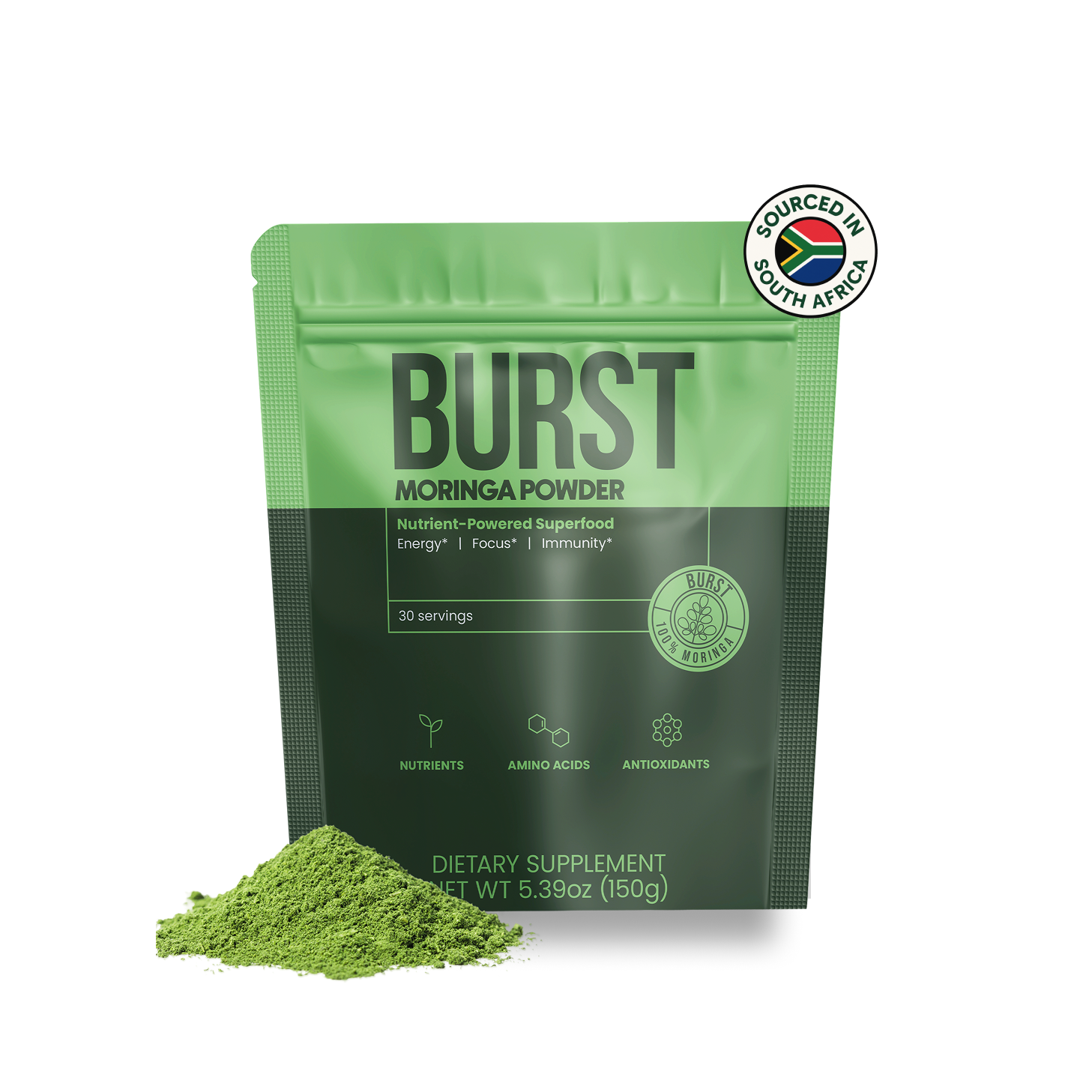
Wild-harvested, single-origin moringa — grown in nutrient-rich Southern African soil, free from fillers, and processed for maximum absorption.